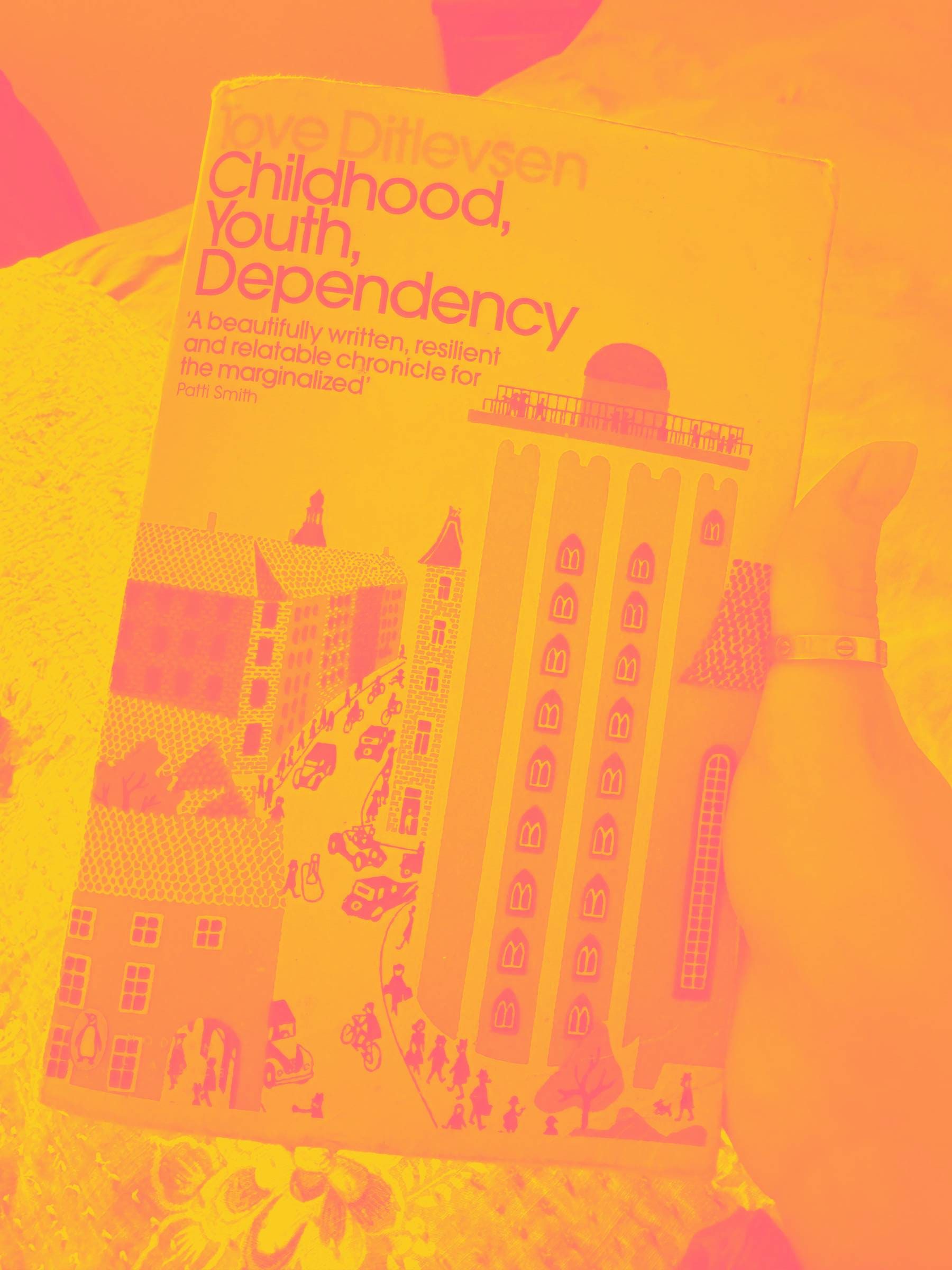
By the time I got round to reading Tove Ditlevson’s The Copenhagen Trilogy, I was in Colombia, not related in any way but I can’t think of a better place to enjoy a good book.
The Copenhagen Trilogy is in three parts, and dissects moments from Tove’s Childhood and Youth, spent as a misunderstood child and aspiring poet, and concludes in adulthood and desperate addiction.
To read The Copenhagen Trilogy is to encounter a world where ‘child’, ’wife’, ’poet’, ‘mother’, ‘freedom’ and ‘dependency’ are not separate but rather co-exist in a single fraught body.
Childhood: ‘Someday I’ll write down all of the words that flow through me’, she thinks one night as she looks out of her bedroom window. This is what she wants more than anything. Dreaming of more freedom and independence, which is not yet available to her, ’childhood is long and narrow like a coffin.’ Tove feels shame. Childhood to Ditlevson is a state of shame, one that will always tar us.
Youth: Although she yearns for acceptance and ‘normal’, it is obvious that she rejects, or at least, neglects this. Tove indulges in her differences and leans into being the struggling and misunderstood artist. This does not come without guilt and conscience, but my understanding is that this guilt is better described as guilt from an absence of guilt. From her domineering, complicated, sensitive mother came the unyielding belief that only marriage could whisk her away and protect her from the pain, poverty and class. This was met with an equally fierce conviction: that she was, and must become, ‘a woman poet’.
It is these same thoughts and same words that seal her fate as one of Denmark’s most celebrated poets, as well as separate her from safety, contentment and those she should be closest to in life.
Dependency: This entanglement becomes viscerally literal. Her third union with the quietly deranged doctor administers Demerol as a substitute for foreplay, a chemical covenant where the drug’s name ‘sounds like birdsong.’ Here, the knot tightens, her marriage metabolising into dependency. Ditlevson, however, refuses the filter of hindsight, with the same ease of which she recounts her experience of a backstreet abortion with unflinching physicality
These are not lurid details but evidence of a life full of conflicting struggles, weakness and strength.
(This has been my favourite read of the trip so far!)
 El Hablador
Leave a comment