GM
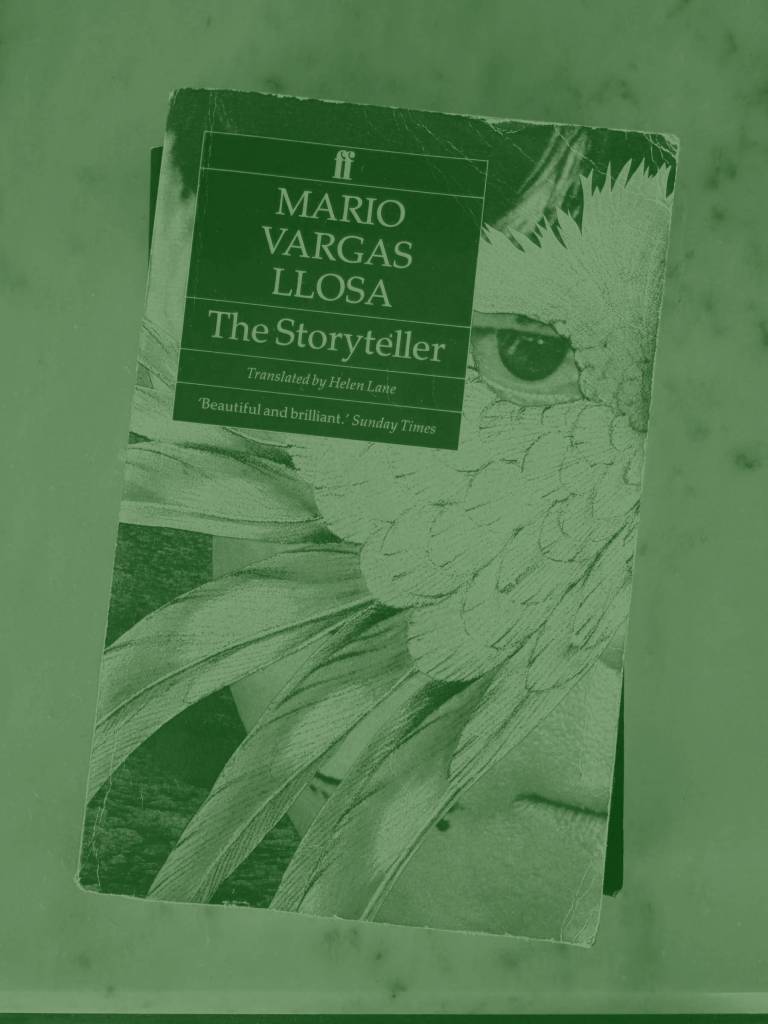
In Mario Vargas Llosa’s El Hablador, the central conflict is not between two men, but between two worlds. The story unfolds through the memories of our Peruvian narrator in Florence, who, upon seeing a photograph of an Amazonian storyteller, is thrown back to his university debates in Lima with his friend, Saul Zuratas.
Saul, nicknamed Mascarita, is a fierce defender of the Machiguenga people, an indigenous group in the Peruvian Amazon . For him, their culture was not primitive, but a complete and different way of coexisting with their surroundings. For these people, rituals and myths were not separate from life, but the very processes that bound life together. Saul understood that for the Machiguenga, myths were a sacred map and to forget is to risk becoming lost.
This is where the figure of the hablador becomes essential. Vargas Llosa braids two narratives: the writer’s rational, modern quest to understand this enigmatic figure, and the visceral, mythic voice of the hablador himself. We see that the hablador’s journey is the ultimate ritual. As he walks, he keeps the stories of the Machiguenga people alive, and by speaking the world, he sustains it. This creates a profound friction, a grinding against each other of two different realities, one that sees a storyteller and one that experiences an essential world-sustaining force.
The twist comes with the realisation that this particular hablador is Saul himself. He has not just learned the stories; he has been absorbed by them. El Hablador is therefore more than a lament for a vanishing culture. The threat from the outside world, the missionary, the colonist is shown not as cultural change, but as an attack. To stop the walk of the hablador is to stop the making of the world itself. This story challenges us to imagine a country that is not a single, unified history, but a land of many simultaneous worlds, and to listen to the stories that walk the land, insisting on their right to exist.
My reading of El Hablador was inevitably shaped by places I have encountered in Peru, and the experience was less one of reading a story than of feeling its landscapes and conflicts seeping into my own reality. Being in the Amazon, walking the streets of Cusco, and visiting places like the Xapiri Ground museum (Amazonian Indigenous Art Gallery), I could feel the friction Vargas Llosa writes about and the grinding presence of simultaneous worlds. The book’s central, aching conflict was in the air and the stones.
I wonder if I had read this story in a distant cold English winter, it would have had the same impact or grip? Here, in Peru, the hablador’s journey, that ritual walk which mends the tears in the Machiguenga world felt viscerally immediate. It transformed the book into a living challenge, making me listen, as the narrator does, for the stories that walk the land, insisting on and believing in their right to exist.
OT
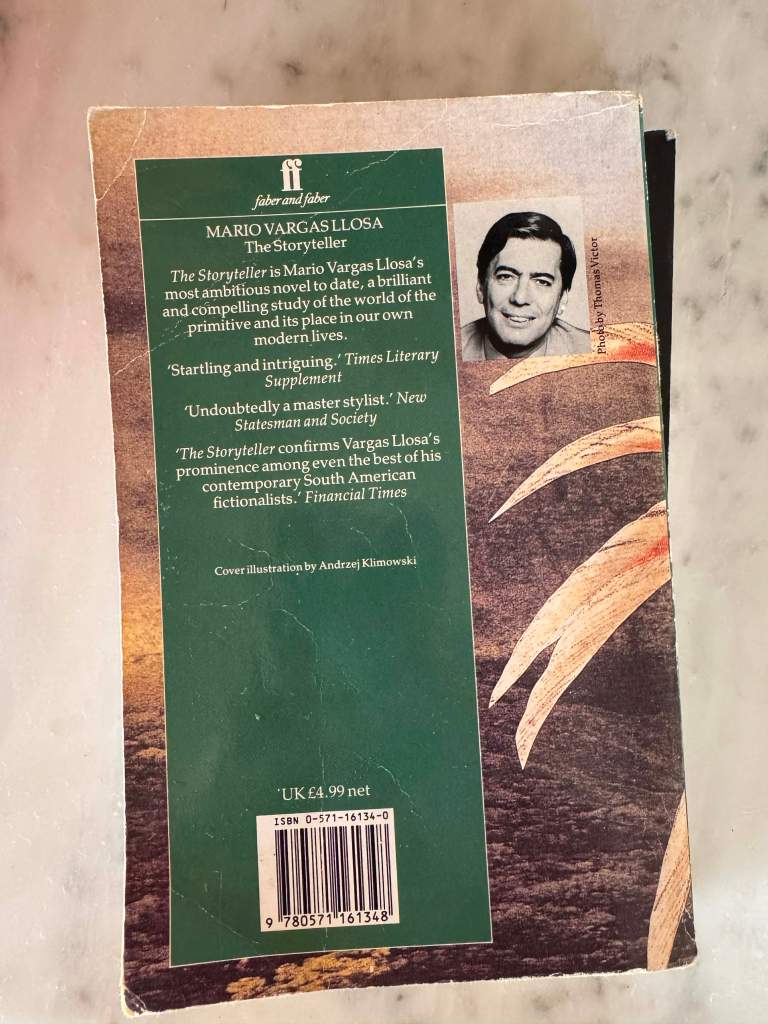
Mario Vargas Llosa’s reflection on time, indigenous culture, evangelicalism, the right to be undisturbed and the creep of so-called modernity captured my imagination and my heart. The novel is a dialogue between (at least) two narrators, moving from familiar, European rationality to indigenous myth and cosmology chapter by chapter.
The reader is tossed between two arguments: one a somewhat caveated defence of contact with the tribes of Peru’s Amazon basin (particularly the Machiguenga); the other a stark warning against contact, backed by folk history and a defence of people being able to ‘keep walking’. This modern reader with my existing prejudices (and on the back of almost 40 years of postcolonialism; El Hablador was published in 1987) identifies more closely with the Storyteller’s vision.
The Machiguenga world is built on fantastical but familiar mythology: humans’ relation to the sun, to the environment, and to each other. Central to the book is the role of El Hablador, a (or many) anonymous or decentered individuals whose social role in a non-literate culture is to: provide entertainment; carry the weight of mythology and cultural history; to make sense of a changing, dangerous and violent world; and to act as a narrative barrier between traditional life and homogeneity.
Throughout reading the novel, I was struck by the importance of these functions, today fulfilled in multifaceted forms and in multifaceted ways. However, the power of the story is to deal with change and with history simultaneously; to imagine new futures. I couldn’t help but think that a Storyteller may well have an important role to play for us, today.
 El Hablador
Leave a comment